Our experts establish data governance framework with a top-down approach as part of the Master Data Management Compliance efforts during the projects. With this approach a more cohesive enterprise-level data governance framework is employeed and qualify our solutions for European GDPR, California CCPA and HIPAA Compliance.
Team Expertise
Project Manager
PMP, Prince2 Certificate
Solution Architect
SOA, TOGAF Architect
Business Analyst
Across industry Verticals
QA Engineer
ISTQB Certificate
SW Developers
Dot Net, PHP, Python
DB Developers
Oracle, MS Sql Server, HDFS
UI/ UX Designer
HTML, CSS, BootStrap
DevOps Engineer
CICD, SVN, Jenkins, Dockers
Delivery
Using the right tools and processes to turn those software requirements into a reality.
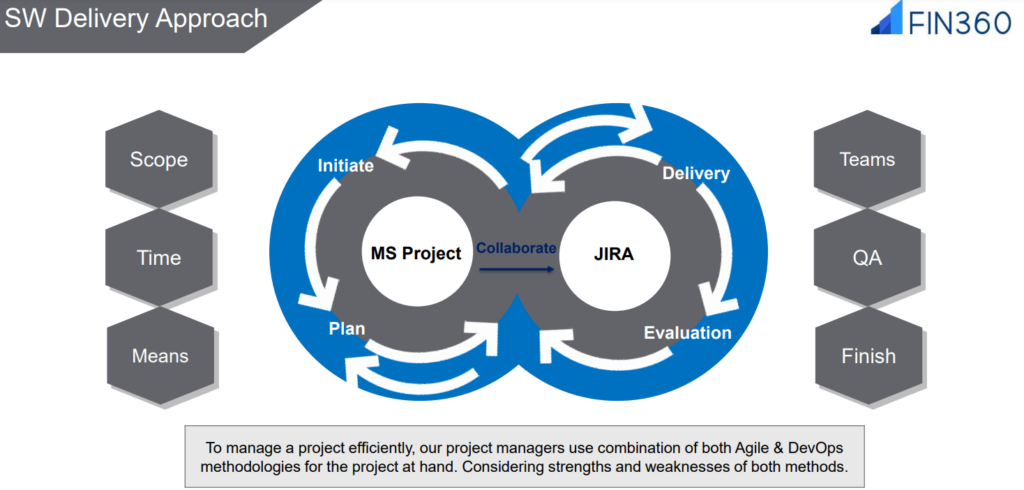
We implement an iterative and incremental approach to software development that emphasizes collaboration, customer involvement, and the ability to respond to change. Agile delivery and Devops are the approaches followed for successful delivery of software.
Agile delivery values individuals and interactions over processes and tools, working software over comprehensive documentation, customer collaboration over contract negotiation, and responding to change over following a plan.
Successful software delivery includes:
Identifying the right tools and technologies for the job
Understanding the customer’s business needs and requirements
Creating a detailed project plan with well-defined milestones
Managing risks throughout the project lifecycle
Ensuring quality control at every stage of development
Effective communication with all stakeholders involved in the project
Whatever the reason, outsourcing can be a great way to get your project done on time and on budget. But it’s not without its challenges.
DevOps approach is a set of software development and delivery practices that aim to shorten the time between committing code changes and deploying them to production. The ultimate goal of DevOps is to enable organizations to rapidly deliver value to their customers by automating and streamlining the software delivery process. DevOps is not a single tool or technology, but rather a set of principles and practices that can be implemented using a variety of tools and technologies. Common DevOps tools include automation tools like Puppet, Chef, and Ansible; containerization tools like Docker; and orchestration tools like Kubernetes. Implementing a DevOps approach can help organizations improve their software delivery process in several ways, including: – Reducing the time it takes to deliver new features or fix bugs – Improving communication and collaboration between development and operations teams – Automating repetitive tasks to reduce human error